Showing posts with label logbooks. Show all posts

Saturday, October 1, 2022

The question of logbooks.

The first one I found was near The Dalles, Oregon - the cutest little stamp just laying out in the open. It was tightly glued to one of the many rocks it was positioned with - and amazingly, it had been there quite a while. The clue stated clearly that it had no accompanying logbook, but I was keen to nab it anyway. How very clever, I thought. But then the question started to niggle: Could it really be considered a letterbox if there was no logbook to stamp into?

The next one I came across, not too many months after, stated in the clue that the letterbox listed didn't have a logbook 'out of convenience.' The question popped up again: Is the process of stamping into a letterbox logbook an 'inconvenience'? I guess sometimes it could be, especially if the weather is uncomfortable or if there are muggles approaching. The lack of logbook surely didn't stop us from recording the find, but I missed stamping my beloved sig-stamp in the logbook. In the spirit of full disclosure, I have an active letterbox series around my town that starts with a traditional box complete with a logbook, but all the rest of the dependent stamps in the series do not; and yet, each of the found stamps count as a traditional find. 

Somewhere in the back of my mind there are echoes of discussions on this topic from long ago. It would seem to me that 'purists' would insist there be a logbook, even going so far to say that it couldn't be considered a letterbox if the logbook was unstampable (too full or too wet to stamp into) or missing. On the other end of the spectrum, there would be those that would accept any intended letterbox as a find regardless of the presence of logbook, box, or sometimes, even the stamp (no, really - if you find the remnants of the box but no stamp, is that still a find? The searcher technically 'found' the location and box, right?). So, what constitutes a letterbox?

I am positive every letterboxer has a ready opinion on the matter. I often think of that old motto of the Australian restaurant franchise Outback - no rules, just right. This sentiment would indicate that clues can be constructed any way the planter sees fit, with any type of container (or none), and without limitations on where a letterbox can be placed (except within National Parks, and I have even heard that some proudly ignore that, as well). 

One could argue that since letterboxing originated in Dartmoor, perhaps that is where we could find the definitive answer about what constitutes a letterbox. "Participants, or Letterboxers, search the Tors and valleys for the hidden treasure, either following clues or simply searching under rocks. A Dartmoor Letterbox is a container – typically a durable plastic box – containing a rubber stamp, a copy of which is taken for the collection, journal, or scrapbook. Also inside is a visitor’s book – where a Letterboxer can leave their mark, usually in the form of a ‘personal’ stamp to prove the visit." Apparently, leaving one's signature stamp is the evidence of the find, at least according to this point of view.

But hobbies and traditions change over time to meet the dynamic needs of its participants, and we have certainly seen a lot of changes in letterboxing, especially here in the U.S. Postals, LTCs, event boxes, personal travelers, hitchhikers, cooties, and many other imaginative ways of clue-writing and stamping have changed the face of letterboxing over the years since it seeped over to our country. I dimly remember some letterboxers were rather put out when Ryan presented a way to digitally record finds - pure blasphemy, they complained. For them, one's logbook was private information not to be shared, and certainly not emblazoned across the internet for anyone to see. As a matter of fact, I just had a clue in my hand where the planter requested a finder not list or mention the find on any digital platform, but to contact them personally, via email, to report on the condition of the box. So be it.

I say, to each their own. No rules, just right, as it were. Ultimately, letterboxing is a game, and if the game becomes 'unfun' due to nit-picking and rigid policing, why continue to play? And that may be the answer to my question of logbooks: What constitutes a legitimate letterbox or find is determined by the planter and/or finder. I have been known to sneak a logbook into a box without one on the trail, but that was just me being snarky, I guess. Maybe I simply wanted to share our siggy; I know in our little group, part of the pleasure of finding a box is seeing all those who have stamped in before us. It provides a sense of community and sharing experience. But, at the same time, we just found a fun little stamp stuck to the bottom of a picnic table - with no logbook or container - that thrilled me with its clever clue and placement. So, there it is: it is all good as long as it's fun, legal, and doesn't hurt anyone. Each planter and finder can determine how they want to play the game.

Often, bending rules can spark inspiration. On the way home from our boxing adventure yesterday, Obimaster and I cooked up a new series that I am anxious to put into play. Yes, there will be a logbook for the series, but, well, I guess finders will just have to see how it unfolds. It stretches the boundaries of the Dartmoor definition, but it does follow the rules of being unexpected, sneaky, legal, and fun. 

ready for the hunt!


Sunday, September 4, 2022

Easy DIY logbooks.


I have been meaning to post about logbooks for a bit now, and a recent thread on Facebook just nudged me into actually making it happen. Of course, there are many truly 'easy' logbooks, namely those that you simply purchase from any discount store (i.e., small spiral-bound, lined notebooks) - no assembly required! But I prefer logbooks that have more substantial pages than lined notebook paper. Plus, I have an absolute ton of printed cardstock craft paper that I have collected over the years, which makes great covers for cute little matchbook logbooks.

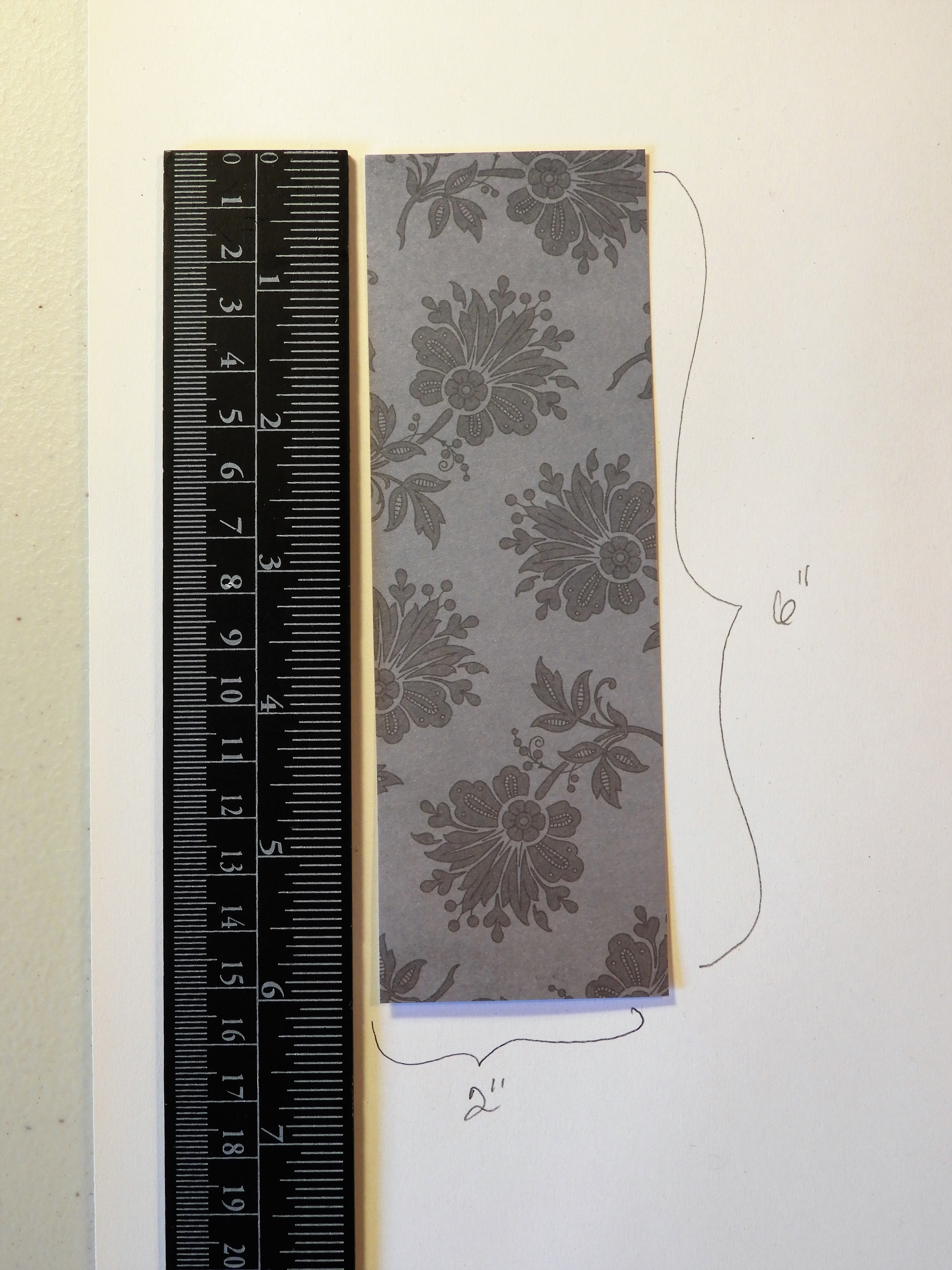
First I cut the cover to 6" x 2". Typically, I am making a handful in preparation for a day of letterbox planting.


Next, I like to use the higher quality copy paper from Costco (24 lb) that comes in ream-and-a-half packages. I will take five sheets and cut them into 2.5" strips lengthwise.


That gives me 3 strips. I will only need 2 strips for one matchbook logbook.


Cut those 2 strips into 2" sections - that gives you 50 pages for your logbook. More than enough!


Stack those up and set them aside for a minute. Go back to your cover and fold two creases at 3/4" and 1" measurements as shown below.


Now take your stack of pages and position them inside your cover as shown.


Then, position your logbook in the heavy duty stapler. You will only need one centered staple.


At this point I fold the cover to match the bottom of the pages and crease at the backside and then manipulate it to fold on the front. 


The bottom flap is usually a bit long to snug under the top flap, so I snip off a bit to give it a nice, easy fit.


And that's it - a little 2" x 2.5", 50-page logbook to fit most letterboxes. I will add that these provide about a 2" x 2" space on each page for finders to add their sig-stamp (or whatever). Those with larger sig-stamps would not be able to imprint their entire stamp on a page.


I also make other types of logbooks, depending on my mood or purpose. For 'rescue' logbooks to add to ailing letterboxes, I carry thinner logbooks like some of these below. I use a brochure stapler to make easy logbooks by simply folding paper and stapling into the crease. The downside to these is that you can only use a few pages (no more than 10, for sure), which gives you a logbook with 20 pages. That is adequate for a rescue logbook, I think; just enough to suffice until the owner can do proper maintenance.

brochure stapler

I add washi tape just to make them look nice :)

A comparison of the brochure-style
and the matchbook logbook

I also own a Bind-It-All that was gifted to me by a friend leaving the hobby; I mostly use these Bind-It-All notebooks for planting notes because they are small, the pages are easy to access/turn, and I can slip them into my pocket easily. Using the Bind-It-All is easy, quick, and the notebooks look nice and neat. In the photo below, I have a 2" x 3" Bind-It-All notebook next to the matchbook logbook for comparison. I do think the matchbook style takes up less room in a letterbox (although you can make them any size you prefer).


Finally, just for fun, I carved a few different sizes of logbook stamps to adorn my homemade logbooks. The largest is just under 2" across, the middle (my latest carve) is 1.5", and the smallest is under an inch across. That tiny one is intended for microboxes; I like to use film canisters with scrolls for logbooks and this little stamp is perfect.


Well, that's it - several of the different ways I create logbooks for my letterboxes. There are many, many creative ways to make logbooks, and I always admire those boxers that really shine in this area. Years ago, I dabbled in making small books with hard covers and sewing in the pages - they are super cool. But I was making them for postals knowing they were not going to be left in the wild. I would be hesitant to put a book like that out in a trail letterbox ... they just take too much effort! I have seen some logs that use the punch of a Bind-It-All or a comb binder and then, instead of inserting an Owire or a plastic comb, they lace the pages together with ribbon. This is very clever and effective, but I have not tried it yet. I also own a comb binder, but I don't find it convenient for letterboxing purposes - I don't really like how the pages turn with the plastic combs, I have found the pages tended to come out of the combs, and it is a big heavy machine to pull out to use (which is why folks like the Bind-It-All - it's small and convenient).

I hope you try your hand at creating your own logbooks for your letterboxes - I love to find handmade logs in a letterbox! Below I have added some links if you want to check out some of the items I mentioned above.

Bind-It-All (be sure to check eBay - I saw cheaper prices there!)

Bind-It-All individual package of spiral wires (the dimensions needed are 2:1 pitch, 1/2" 24 loop O-wires)


Wednesday, February 2, 2022

Lookin' to downsize, the sequel.


An old friend pulled back into service -
my old hemp bag is 9" x 8" and weighs next to nothing.
It's cool because it can be carried as a purse or a daypack
.


So, here is what I came up with to minimize my letterboxing kit. I swapped out my beloved Ori backpack for a hemp convertible bag-backpack that I picked up in Athens. I carried it as my everyday bag for absolutely years after returning from Greece in 2015. It is not waterproof, but it is washable and wears like iron. I have thought about spraying it with a waterproofing product like Camp Dry. 

For the logbook, I am using the small Moleskine art-sketch book. The large Altoid-type tin holds enough ink for the trail, a compact pen, and our siggy; I lined it with felt to reduce rattle. I included only one glove, because that is all I ever use, along with a mini mister bottle and piece of felt for wiping inky stamps. The letterbox first-aid kit contains extra zips, felt pieces, and small logbooks for administering maintenance when needed. Finally, I added my planting notepad and (another compact) pen.

Altogether, this bag loaded weighs 1.86 lbs. Not bad! My old kit weighed over 3 lbs.; the old ink box and logbook alone weighed the same as this entire downsized kit! Now, lightening the load by only a pound or so doesn't seem like much, but it sure feels less bulky and heavy! It also looks more natural in a city or park trail than a more hiking-type backpack. I can hardly wait to give it a go on the trail.

And, just a thought: for letterboxing adventures that require more than a stroll, I would definitely go back to my Ori bag because I could carry a water bottle, a small snack, and my cell phone together with my boxing stuff. The Ori is ergonomically designed and isn't difficult to wear for long periods of time, even when fully loaded.

I think the only thing I am going to add to this minimal letterboxing kit is an old fork from a thrift store for surface digging. That comes in particularly handy with boxes that have lived forgotten in the wild for a number of years. And remember, Obimaster carries all the other heavy stuff - clippers, plastic trowel, flashlight, small first aid kit, bug spray, etc. We have divided the labor - I do the stamping in and maintenance, and he carries the stuff I don't want to carry! Frankly, I would do fine without all the extras, but he feels better having all that stuff handy when I am in the brush fussing about brambles or other such things while looking for a box. 

Y'know ... I am not sure what is more fun - being out on the trail looking for boxes, or putting together the perfect letterboxing kit. What do you think?

Tuesday, February 1, 2022

Lookin' to downsize.

So, everyone wants to talk about what they carry on the trail  - what they deem important inside their letterboxing pack. I recently posted about creating an 'emergency letterboxing kit' to keep in my car (or in my bag) for those impromptu boxing opportunities. Just having that little kit has made me yearn for a smaller letterboxing pack. 

This is a perfect size for a small backpack,
and it is made wonderfully - unfortunately, it is not cheap.
Definitely a downside. But, it won't wear out!

I love my little Ori backpack, truly - it is the perfect size, it is made beautifully, waterproof with a trail-proof bottom, and it comes in a lot of really nice colors. I think you would be hard-pressed to wear this thing out. But, it is not cheap, which is definitely a downside. And it is not heavy, but what I carry in it is. 

The weight of the 8" x 5" Moleskin logbook, all those inks,
and the plastic box all adds up!


In addition to my log and ink box, I carry other things in there, too: gloves, letterbox first-aid (extra zips, felt, and small logbooks), a small first aid kit, and an extra pen & notebook for planting notes. And of course, my cell phone. Frankly, it feels like too much - I want to downsize!

This might be more like it ...

This Moleskin logbook is only 5.5" x 3.5",
and that oversized Altoid tin (4" x 3") doesn't weigh anything close to that plastic box.
And just two ink pads is a lot lighter than a whole rainbow.

I was thinking about getting a smaller pack, as well, but I may just swap out the book and ink box to see if that makes enough difference. I think I will miss all the colors, but in reality, the boxes we have been finding lately (really since we have been back in) don't require a rainbow of colors. I have known people who have carried Tombow markers, and it is really cool to have all those colors, but I would be afraid of mucking up my spendy pens with a black-ink-encrusted stamp. I also used to carry a small, damp rag to clean stamps, but that seems to be unnecessary at this point, as well. Nowadays, I just end up using a dark ink, for the most part.

on the trail in Troutdale, Oregon

Now, I will say I am fortunate - Obimaster carries all the other items that are nice to have on the trail: a small trowel, waterproof gloves (mine are not, unfortunately), clippers (for those nasty blackberry brambles), small flashlight, and probably other things I am unaware of ... it is his pack, after all. I am in charge of the ink and stamping business, and he is the tool-guy. So it works. But, if you need to carry those things because you don't have an extra boxer with you who is a tool-guy (or gal), I am sure there are small lightweight clippers to be had, and you could use an old fork in place of a trowel (in fact, that was a great suggestion from a fellow boxer last time we were talking about boxing packs). We don't have a big bug problem around the PNW, generally, so I don't carry bug spray in my pack - it is in the car, though, in case we are boxing in August on the peninsula. Yikes!

What do you think? Is smaller better? Just for fun, I weighed the large log and ink box and the smaller kit to see if there was a difference. Turns out the larger log and inks are 1 pound, 8.4 oz, while the smaller options are 1 pound lighter. Doesn't sound like a lot, really. But, maybe the smaller log and inks would be more discreet, especially if I were to get a smaller backpack or bag. (I am now remembering that Thunderbird wears a fishing vest - hm, not a bad idea!) 

Perhaps discretion is motivating my desire to downsize a bit - it seems like there are way more muggles on the trails than I remember from years ago. The parks are packed, parking is a premium, there are always dog-walkers, and kids are everywhere. (Don't get me wrong - that's a good thing!) All those other park visitors are making it more challenging to not attract attention while working out a clue. My goal is to find the box, stamp in quick, and get it back in place before being spotted - which is almost impossible. Even in the middle of winter! Maybe that is why more boxes are planted in cemeteries - not a lot of muggles hanging around there :)

Douglass Pioneer Cemetery

Monday, March 15, 2021

Lost and Found


When I started carving, I didn't even think about saving my images for history sake. But it wasn't too long into the journey that I started a logbook to record all my carving success. They were always a source of inspiration and fun to look through every once in a while - to remember where I had been and what I had done.

As you know, I have been working at getting myself reestablished for carving and creating. In the effort, I realized I had misplaced those carving logs. To think I had lost them, (or worse, gotten rid of them), made my heart hurt. I looked for a couple of days only to come up empty-handed and frustrated.

But, this morning, my beloved found them stashed in his office for 'safe keeping.' I am sure I put them there, but just didn't remember. I am so grateful to have them back at my fingertips. Looking through page after page of images gives me hope - if I did it once, I can do it again! I must admit, I am a bit rusty. 

Maybe you would like to see some of the pages from the first log...


That super yard sale stamp is about 5" across - as you can imagine, the more I carved, the smaller the stamps and details would become. And yes, this was back when finding fantastic carving material and tools was not an issue. We didn't know how good we had it!

I wonder about those Nat'l Day of Planting stamps - as I remember, they were for the country-wide event, and it says 'first annual,' but I am not sure if it is what evolved into what is called PAL today. The stamps are cool - I wonder if they are still in my pile-o-stamps - I guess I will know when I take the time to go through them all! 

So, I leave you with a slice of pleasure. Back in the day, after the family was well asleep, I spent many a night carving with with only my thoughts and music as company. Last night I had the opportunity to find that space again. It made me realize how much I have changed, and how much of me has remained the same. 

Much to ponder. Meditate on it, I will.


Wednesday, February 3, 2010

A little scrappin'


I am part of a very fun and interesting project right now that involves stamping my favorite carves in logbooks of the other participants in the project. I am having quite a time, however, choosing which of my many, many stamps are my favorites! With each logbook that arrives, I am stamping different stamps. I know this is a bit of a spoiler, but I so liked how this page turned out, I just had to share it!

Some of the textures are lost in the scan, unfortunately. The light area is actually stamped on fabric, while the hooded portrait is mounted on textured leather-look paper. The Jedi 'wings' logo is popped out with some foam tape, as well.

I don't do much scrapbooking, but I sure enjoyed this!

Friday, November 27, 2009

Stitched Logbooks

a few stitched logbooks made specifically to use as event logs

This is my favorite type of logbook to make, although it does take a little longer. Once you get the rhythm of it though, it's not difficult. Again, others have done fabulous tutorials, like this one on Atlas Quest, so I'm not going to duplicate that here. Making a logbook of this type does require more involved measuring, using thicker cardboard or chipboard for the covers, gluing and stitching, but the end result is pretty impressive.

Something about making these types of logbooks gets my creative juices flowing. I would recommend wrapping your book cover material (chipboard) with the thinner printed scrapbooking paper, as gives you cleaner edges than using cardstock. I also like to use a higher quality brochure-type paper (like 32 lb) for the pages, rather than just regular copy paper. Here's one of my favorites; it was a postal created for the Let the Wookie Win postal ring...Star Wars, of course.

My Obi-Wan logbook along with a smaller
Snoopy logbook featuring Charles Shultz

a page from the Obi-Wan logbook

Inside this logbook I included quotes of my hero on each page, printed out on my computer then pasted in place. Since I have so many Star Wars stamps, I also sprinkled those throughout the log to give the pages some interest.

There are other, more intricate stitching techniques out there for making stitched books - the style I use is the most simple. I absolutely love the method that shows the stitches on the outside of the binding, but I've not attempted that type yet. I've seen some fabulous examples of this over the years - most impressive.

one of my latest stitched logbooks
for the upcoming Favorites project

Wednesday, November 25, 2009

Stab-Bound Logbooks

Another day of logbook show-n-tell - this time an easy technique called Japanese Stab Binding. I'm not going to try to duplicate a tutorial here, but HERE is a good one with pictures and directions. Don't be intimidated...if I can do it, it's not that difficult!


Here is a stab-bound logbook I made for a postal called The Seventh Day. It was a rather large stamp, and I wanted the entire stamp featured on the cover. I have added stars to the extra thread 'ends', but you could use beads, charms or even just trim them short.


Here is another example of a logbook using this fun and fast technique. Made for the Dog Breeds postal ring, it featured my sweet Brittany, Molly. Although this sewing technique works best with softer cover material (cardstock), I used a stiffer cardboard and just scored the fold along the sewing to accommodate opening the book. Also, measuring is not as much of an issue with this technique, as the covers and pages are all the same dimensions, no folding involved.

Here is the interior of the book where I included information about the postal and a pic of me & Molly. For this particular logbook, instead of carving something to decorate each page, I used fancy dog-print stickers I found at the craft store.

I have used this type of logbook for many letterboxes; I especially like to use this style for hitchhikers, since it's pretty fast once you get the hang of it.

ps. For a good Wiki article on bookbinding, check this out.

Monday, November 23, 2009

Pocket Logbooks

Since I have not talked about logbooks yet, I thought it was about time to touch on this interesting aspect of our hobby. Logbooks, sometimes called journals, can be as simple as a 99-cent spiral bound notebook to something fancy like a spendy Moleskine (my preference for my personal traditional 'boxing logbook). We need logbooks for all types of letterboxes and it is fun to create your own. One of my traditions is to make a logbook for each event I attend, incorporating the theme into the logbook - it's a fun way to keep the event stamps, exchanges and any traditionals found all together like a scrapbook.

In the next few posts, I will attempt to do a little show-and-tell of some of the logbooks I've done. Maybe I can inspire you to create some fun logbooks, as well.

Ribbon & Bows comb-bound logbook

This comb-bound logbook is what I would call a pocket logbook. Each page is created to be a pocket, similar to what you would find in a school-type notebook. For the pages, I simply folded the cardstock to form the pocket, cutting out the front on a diagonal and then gluing the bottom closed. These pockets then accommodate the bookmark-type cards that would slide inside - that's where 'boxers could 'stamp-in'. For this one, I used that great cardstock with different colors on each side that I found at Costco so long ago. On the stamp-in cards I attached colorful ribbons to add more to the theme of the 'box.


I invested in a comb-binder several years ago to put together my own annual personalized calendar for family holiday gifts. That binder comes in very handy for making quick logbooks. I am interested in a Bind-It-All binder, but it's a little out of my price range at the moment...definitely a wish-list item.

The next pocket-style logbook is inspired by a sales brochure. It is a tri-fold design featuring pockets on the inside flaps (the edges are glued down to create the pocket). That leaves the middle for information about the theme of the box. This particular logbook was all about Seattle's historic Paramount Theater, one of the great old-time theaters scattered across the country.

The front of the logbook was rather plain,
so I just photographed the top half.


Again, there are cards for finders to stamp-in, with plenty of room for comments and sig-stamps. One of the things I regularly do is carve a bonus stamp to decorate logbook pages and this 'box was no exception. I was going for an old-fashioned movie ticket feel, stamping the name of the theater on each card in subtle watermark ink.

click on the pic to see more detail

On the pockets, I added an old and modern pic of the theater, just for fun. You can also see the information added to the middle section.

lots of information packed into this logbook

I think the pocket-style logbook is one of my favorite types. It's practical, too; if you use this style in a traditional 'box, when the pages are full you can remove the full pages and add new without re-making the whole book.
Blog Widget by LinkWithin